
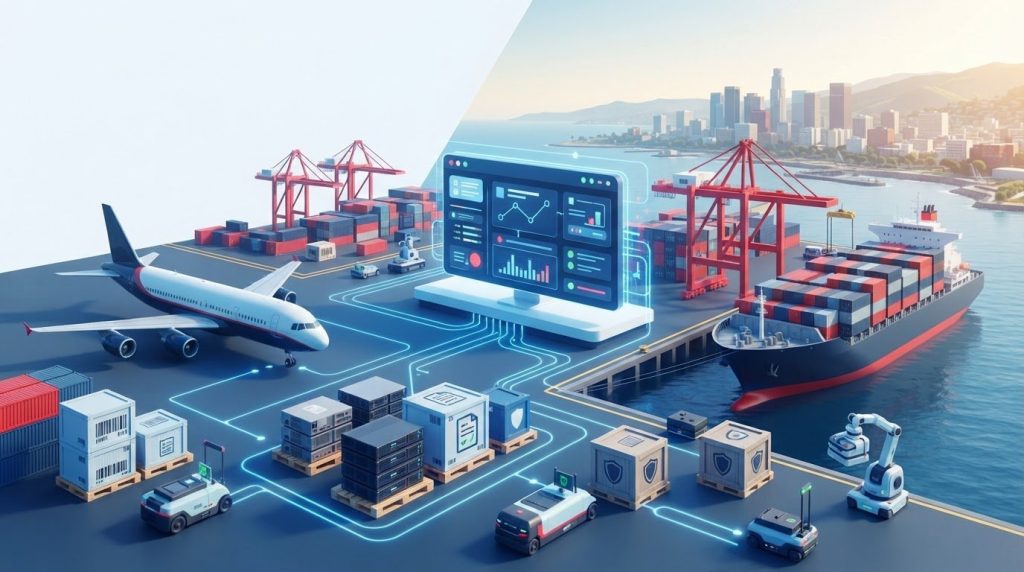
A freight booking moves commercial goods, but it doesn’t define who handles export documentation and compliance. For a business shipping internationally without a legal entity in the relevant market, exporter of record support can clarify who manages agreed export tasks, while freight coordination remains a separate part of the shipment plan.
To make the process straightforward, first distinguish the roles: an Exporter of Record (EOR) handles agreed export administration, while a freight forwarder coordinates transportation. Global4PL provides B2B EOR services for commercial goods and IT hardware, along with international air freight coordination and customs brokerage.
This guide explains when EOR support fits an operating model, which shipment details and responsibilities to clarify, and how to assess service scope and communication. Use these steps to map accountability before arranging a shipment, so export administration and transport coordination work together.
Key Takeaways
- Learn when exporter of record California support suits B2B shipments, including exports made without a legal entity in the relevant market.
- Distinguish EOR administration from freight forwarding and identify where the two functions work together.
- See how shipment details shape the export workflow, documentation coordination, and applicable requirements.
- Assess provider fit by clarifying service scope, internal ownership, document controls, visibility, and exception communication.
- Explore how Global4PL’s EOR services and international air freight support B2B exports of commercial goods and IT hardware.
Exporter of Record California: What the Role Means for B2B Shipments
An Exporter of Record (EOR) is a party engaged to handle specified export administration tasks for a shipment under an agreed service scope. This can include coordinating export documentation and related compliance activities. The exact responsibilities depend on the transaction, so define the scope rather than assuming every EOR arrangement covers the same tasks.
A exporter of record California arrangement is worth considering when a company needs to send commercial goods overseas but lacks a legal entity in the relevant market. Global4PL provides EOR services for B2B international trade, including shipments of commercial goods and IT hardware. Assess the goods, destination, parties, and assigned responsibilities to determine how EOR support fits the shipment.
When might a California business consider EOR support?
Consider a company supplying IT hardware to an international business customer. If the company lacks a legal entity in the relevant market, it may need support coordinating the export administration assigned to the EOR. The service provides a defined point of responsibility for those tasks, while the exporter retains any responsibilities assigned to its team. The same assessment applies to other commercial goods moving across borders.
Sales terms also matter. Incoterms rules help allocate delivery-related responsibilities between seller and buyer under a sales contract. They provide useful context, but don’t specify who will perform every export administration task. Record those assignments in the shipment’s service arrangements so each party understands its role.
What does an Exporter of Record not automatically replace?
An EOR arrangement doesn’t automatically take over every responsibility held by the exporter or other parties. The exporter may still need to supply accurate shipment information, coordinate documents, or retain relevant records. Identify who owns each task as part of the transaction and agreed service scope.
Transport is a separate function. Booking air freight, coordinating carriage, and handling goods are logistics activities, not automatic parts of EOR administration. A freight forwarder may coordinate the shipment’s movement, while an EOR arrangement covers specified export tasks. One service can complement the other, but arranging transport alone doesn’t define export responsibilities, and appointing an EOR doesn’t automatically settle every compliance or recordkeeping obligation.
Before shipment, map each task to a responsible party. Confirm who provides information, manages documentation, coordinates transport, and responds when shipment details change. This avoids gaps caused by one party assuming another has completed a task.
How Exporter of Record Support Fits the Export Workflow
A reliable export workflow starts before transport is booked. Review the transaction and shipment details, then assign responsibility for export administration, document preparation or review, and transport arrangements. Make these assignments before handoff, rather than inferring them from a freight booking or a general service label.
Workflow summary: Review the transaction, assess shipment-specific requirements, assign documentation tasks, coordinate transport, then hand off the goods with clear ownership of outstanding actions.
What shipment information should be ready for review?
Gather the details that shape the transaction: an accurate goods description, destination, recipient, end use, and the parties involved in the sale and shipment. Keep these details consistent across transaction records and shipment documents. If an item, recipient, or destination changes, update the relevant parties before the shipment proceeds.
Classification, licensing, and screening require transaction-specific assessment. For U.S. exports, the Export Administration Regulations (EAR) are one relevant reference point, but whether particular controls or filings apply depends on the goods, destination, parties, and current rules. Don’t assume an item’s classification or licensing outcome from a broad product description alone.
How do export documents connect to freight coordination?
After reviewing the transaction, the exporter and EOR provider can coordinate the export administration tasks assigned to them. The freight forwarder uses shipment details and available documentation to coordinate carriage and handoff. Air freight coordination supports the movement of goods; it doesn’t determine export controls or settle every documentation responsibility.
Before the shipment moves, make the document workflow explicit. Identify who will:
- Prepare each required document or provide its source information.
- Review details for accuracy and resolve discrepancies.
- Submit or transmit documents where applicable.
- Retain records and communicate updates to the other parties.
This division prevents a common operational gap: each party assumes someone else has completed a task, while the shipment waits for information or a decision. An exporter of record California arrangement works best when its agreed scope connects clearly to the exporter’s internal responsibilities and the freight forwarder’s transport plan. Global4PL brings EOR services and international air freight coordination together for B2B shipments, with each role treated as a distinct part of the workflow.
EOR vs. Freight Forwarder vs. In-House Exporting: Compare Responsibilities
These roles address different parts of an export operation. A freight forwarder may book transport and coordinate shipment movement, but that doesn’t automatically mean it performs every Exporter of Record (EOR) task. The key comparison is whether each required activity has a clearly assigned owner, whether tasks are managed internally or through a service provider.
| Operating role | Typical focus | What to clarify |
|---|---|---|
| EOR support | Agreed export administration tasks for a specific transaction. | Which tasks are included, what information the business must provide, and how exceptions are handled. |
| Freight forwarder | Transport coordination, such as arranging carriage and managing shipment handoff. | Which transport activities are covered and how shipment updates and documents are shared. |
| In-house export operations | Internal oversight and tasks assigned to the company’s own team. | Whether staff, systems, and processes can support the shipment profile and destinations. |
The functions can work together. A company might retain internal oversight, use EOR support for defined administration, and rely on a forwarder for transport coordination. Engaging an EOR provider doesn’t automatically transfer or eliminate every responsibility the exporter may have. The actual allocation depends on the transaction, applicable requirements, and agreed service scope.
Which operating model may fit your export program?
Consider your team’s export experience, the type and regularity of shipments, destination markets, and whether your business has a relevant entity footprint. A company with established internal expertise may manage more tasks itself. Another may assign specific administration externally while keeping an employee responsible for oversight. An exporter of record California arrangement should fit the company’s operating model, not replace that assessment.
Which questions clarify service boundaries?
Define the handoffs before shipment activity begins. Record the answers so internal teams, the EOR provider, and the forwarder share the same operating picture.
- Who reviews shipment documents, coordinates applicable filings, and communicates with transport partners?
- Who acts when information is missing, an exception arises, or shipment details change?
- What client inputs are required, which tasks are excluded, and what reporting or updates should the business expect?
These boundaries are practical controls, not paperwork for its own sake. They help teams identify an unassigned task early and avoid assuming that a transport booking covers export administration or that outsourcing removes the exporter’s need for internal oversight.

How to Assess EOR Readiness and Provider Fit for California Exports
Start a provider assessment with your operating reality. If a shipment is delayed because responsibilities or documents are unclear, or your team is unsure how to support an international customer’s delivery terms, map the process before comparing service scopes. For a company considering an exporter of record California arrangement, the goal is to identify which tasks need support while keeping internal ownership visible.
Prepare a practical export-service brief
Summarize the shipment profile and your current workflow. Separate confirmed transaction facts from open questions so assumptions don’t become instructions. A concise brief can cover:
- Goods and destinations: Describe the products, destination markets, recipients, end use, and expected shipment patterns.
- Existing arrangements: Note current forwarders, transport plans, internal export processes, and whether the business has a local legal entity relevant to the transaction.
- Review needs: Identify known classification, licensing, or screening questions without presuming an outcome.
- Internal ownership: Name the business contacts or approvers responsible for supplying information, reviewing documents, and making decisions.
- Reporting expectations: Define the updates, shipment visibility, and records your team needs to manage the transaction.
This brief gives an EOR provider a clear starting point and helps your team identify whether support is needed for recurring shipments, a particular destination, or a defined set of administration tasks.
Evaluate provider scope and operational communication
Assess whether the service scope connects cleanly with your internal team and transport partners. Confirm the included tasks, exclusions, information the client must supply, and owner for each handoff. Set document controls as well: establish how documents are reviewed and updated, who is responsible for changes, and how your business can access shipment information.
Communication matters when plans change. Clarify how the workflow handles missing details, shipment changes, and exceptions, including who receives updates and how issues are escalated. Consider support availability alongside the expected communication process; Global4PL provides 24/7 customer support. For B2B companies exporting commercial goods or IT hardware, clear ownership and timely visibility help align export administration with freight coordination.
Use the brief to define your requirements, then discuss your export program requirements with Global4PL.
How Global4PL Supports B2B Exporters with EOR and Air Freight
Export administration and transport coordination address different operational needs. Global4PL provides B2B Exporter of Record (EOR) services for companies exporting internationally without a local legal entity, alongside international air freight coordination and customs brokerage. For a business searching for an exporter of record California, Global4PL’s EOR service defines support for assigned export tasks, while its air freight service coordinates the movement of goods. Clarify the scope of each capability and the responsibilities that remain with your team.
Where Global4PL may fit an export operating model
Global4PL supports B2B exports involving commercial goods and IT hardware. The company operates in more than 168 countries. Match the service scope to the goods, destination, parties, and responsibilities for the transaction.
Global4PL’s IOR/EOR program enables the export of non-revenue shipments without paying the taxes and duties normally associated with a temporary import license. For each shipment, clarify which tasks the provider administers and which remain with the client. Air freight coordination addresses transport planning and handoff, while customs brokerage is a distinct service. Neither transport coordination nor an EOR arrangement should be assumed to determine every export responsibility.
What to prepare for a Global4PL discussion
Bring a concise summary of your shipment and current process. Include:
- Goods and destination: Describe the goods, destination, recipient, and known end-use details.
- Shipment timing and pattern: Share expected timing and whether shipments are occasional or recurring.
- Current logistics arrangements: Note existing freight partners and how transport is coordinated.
- Task allocation: Identify the export tasks you want administered, those that remain with your team, and the information your team will provide.
These details help align EOR support with your operating model without treating it as a replacement for internal oversight or freight coordination. For more on the transport side, read the commercial air freight buyer’s guide.
Bring your shipment profile and questions about task ownership to the discussion. Contact Global4PL to discuss your export program and the service scope suited to your B2B operations.
Set Clear Ownership for Your Next Export
A well-defined export plan starts with shipment-level accountability. An Exporter of Record can manage agreed export administration tasks, while a freight forwarder coordinates transport. Neither role should be assumed to replace the other or every responsibility held by your business. For a company assessing exporter of record California support, the right fit depends on the shipment profile, destination, parties, and documented service scope.
Prepare key transaction details, assign internal owners, and clarify who reviews documents, handles exceptions, and shares shipment updates. These steps help your team compare support against operational needs rather than relying on broad service labels.
Global4PL supports B2B international trade in more than 168 countries and provides 24/7 customer support. Its G4SCM Screener checks 18 databases, updates daily, and provides 100% guaranteed visibility, adding a screening and visibility resource to the export workflow.
Discuss your export requirements with Global4PL to explore how EOR administration and air freight coordination can fit your shipment profile and agreed responsibilities.
Frequently Asked Questions
What does an Exporter of Record do for a California business?
An Exporter of Record (EOR) provides agreed support for specified export administration tasks in an international transaction. For a California business, an exporter of record California arrangement can clarify who coordinates assigned documents and related communications. The scope depends on the shipment, destination, parties, and service agreement. It’s distinct from arranging transportation alone, so define document responsibilities and applicable requirements for each shipment.
Does a California business need an Exporter of Record?
Not every business or export shipment needs the same service arrangement. A company may assess EOR support if it needs help administering international B2B shipments, particularly when it lacks a local legal entity relevant to the transaction. Consider the goods, destination, parties, and your team’s internal capabilities. Review the shipment details and assign responsibilities rather than assuming an EOR is required for every export.
Is an Exporter of Record the same as a freight forwarder?
No. EOR support covers agreed export administration tasks, while a freight forwarder coordinates transportation activities. A business may use both for one shipment: the EOR provider handles its defined tasks, and the forwarder coordinates carriage and handoff. Neither role should be assumed to include the other’s work. Document each party’s scope, handoff points, required client inputs, and process for communicating exceptions to avoid gaps or duplicated effort.
Can an Exporter of Record help a company export without a foreign legal entity?
Yes. EOR services can support B2B companies exporting internationally without a local legal entity, depending on the transaction and agreed scope. Global4PL provides EOR services for commercial goods and IT hardware to support this operating need. Share the shipment and transaction details, then establish which export administration tasks the provider will handle and which remain with your team. The service scope should reflect the specific shipment.
What information should I provide to an Exporter of Record?
Provide an accurate goods description, destination, recipient, end use, transaction parties, and anticipated shipment timing. Include your current freight or logistics arrangements and any known documentation or export-control questions. This information helps the parties understand the shipment and define service responsibilities. Classification, licensing, and other compliance questions require transaction-specific review, so don’t infer an outcome from a generic product description or incomplete shipment details.
Who remains responsible for export compliance when using an EOR provider?
Responsibilities depend on the transaction, applicable requirements, and written service arrangement. Using an EOR provider shouldn’t be treated as automatically removing every obligation from the exporting business. Define who performs each agreed task, what information your team must supply, and how exceptions are escalated. For legal, control, or filing questions, verify current requirements through authoritative sources and avoid relying on assumptions about the provider’s role.
How should I compare Exporter of Record providers?
Compare the written service scope, experience relevant to your shipment profile, communication practices, visibility, exception handling, and client responsibilities. Separate export administration from freight coordination, even if one provider offers both. Review assumptions, exclusions, handoff points, and reporting expectations, then assess whether the arrangement fits your internal team and destinations. Clear answers show how responsibilities will work in practice.


